


A “good-looking” website and a “high-converting” website are not the same thing. (I’ve seen plenty of gorgeous sites that quietly collect dust while the owner wonders why the phone never rings.)
A high-converting website is built to do one job: turn the right visitors into the next step; a call, a quote request, a booking, a form submission, or a purchase. And in 2026, your site has to do that while people are distracted, impatient, and usually on their phones.
Let’s walk through the key design principles that move visitors from “just browsing” to “let’s do this.”

What “High-Converting” Really Means in 2026
A high-converting website isn’t pushy. It’s clear, fast, and confidence-building.
Here’s what that looks like:
- Clarity in the first 5 seconds: What you do, who it’s for, and what happens next.
- Speed that doesn’t test anyone’s patience: If the page lags, your leads disappear.
- Mobile-first design: Tap-friendly buttons, readable text, no tiny menus.
- A single, obvious primary action: One main CTA per page (not five).
- Trust signals baked in: Proof, credibility, and real-world details that make you feel legitimate.
Pro Tip: If someone can’t tell what you do without scrolling, your conversion rate is already taking a hit.
The Conversion Trio: Layout, Copy, and Flow
Conversions happen when these three work together. If one is off, the whole experience feels “meh” (and “meh” doesn’t convert).
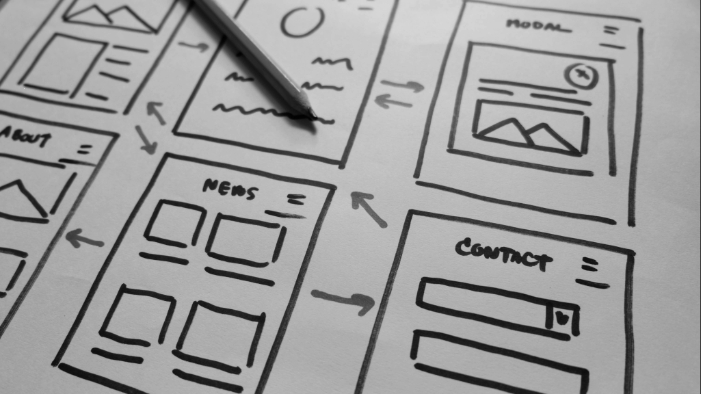
Layout: Make the next step obvious
Your layout should guide attention in a clean order:
- Headline (what you do + for who)
- Short support line (the result or differentiator)
- Primary CTA (the action)
- Proof (reviews, logos, stats, quick credibility)
- Details (services, process, FAQs, case studies)
Use:
- Strong headings and short sections
- Plenty of spacing
- Buttons that stand out (and repeat logically down the page)
Copy: Reduce confusion and decision fatigue
High-converting copy answers the real questions people have:
- “Is this for me?”
- “Do they solve my problem?”
- “Why should I trust them?”
- “What does it cost (or what happens after I reach out)?”
- “Is this going to be a hassle?”
Keep your copy specific. Instead of:
- “Quality solutions for your business”
Try:
- “Monthly bookkeeping for small business owners who want clean numbers and zero surprises.”
Flow: Create a path that feels effortless
Flow is the “story” of the page. It should move someone from curiosity to confidence.
A simple flow that works for most small businesses:
- Problem (what’s frustrating them)
- Solution (what you do)
- Proof (why you’re credible)
- Process (how it works)
- CTA (what to do next)
Pro Tip: Every page should have one job. If your homepage tries to be a homepage, a brochure, and a portfolio all at once, it usually converts like none of them.
Design Elements That Build Trust and Reduce Friction
Trust isn’t just an “About” page thing. It should show up everywhere.
Trust builders (use more than one)
- Testimonials with specifics: Not “Great service!” but “Cut our quote time from 2 days to 2 hours.”
- Case studies or results snapshots: Even short ones.
- Real photos: Your team, your work, your location, your process.
- Clear contact info: Phone number, email, location/service area.
- Professional cues: Consistent branding, clean layout, easy navigation.
Friction reducers (small details, big payoff)
- Short forms: Ask only what you truly need.
- Helpful microcopy: “We’ll respond within 1 business day.”
- FAQ sections: Answer objections before they become bounce points.
- Transparent expectations: Timeline, process, what happens after someone submits.
Pro Tip: People don’t avoid forms because they hate forms. They avoid forms because they’re not sure what happens next.
Conversion Killers (and How to Fix Them)
These are the most common issues we see when a website “should” be converting… but isn’t.
Mistake 1: Too many CTAs
If everything is emphasized, nothing is.
Fix: Pick one primary CTA per page. Secondary CTAs can exist, but they should be clearly secondary.
Mistake 2: Generic messaging
If your headline could belong to 50 competitors, it’s not doing its job.
Fix: Add specifics: audience, outcome, niche, location, or differentiator.
Mistake 3: Hiding the proof
If testimonials and examples are buried, visitors never see the trust signals they need.
Fix: Add proof higher on the page, right after the hero or after the first key section.
Mistake 4: Slow pages and heavy visuals
Big images and bloated tools can quietly tank performance.
Fix: Compress images, remove unnecessary plugins, and prioritize speed on mobile.
Mistake 5: A “maze” navigation
Too many menu items, unclear page names, or dead-end pages = drop-offs.
Fix: Simplify your navigation and build a clear path: Services → Proof → Contact.
Simple Tools to Test, Measure, and Improve Over Time
You don’t need to guess what’s working. You need a basic measurement setup and a habit of small improvements.
What to measure first
- Page traffic (which pages matter most)
- Conversion rate (form fills, calls, bookings)
- Bounce rate and time on page (are people leaving immediately?)
- Form completion rate (are people starting but not finishing?)
Helpful tools (no overhaul required)
- Google Analytics (GA4): Track conversions and top pages
- Google Search Console: See what search queries bring traffic
- Microsoft Clarity or Hotjar: Heatmaps + session recordings (you’ll learn a lot fast)
- PageSpeed Insights / Lighthouse: Identify speed issues and mobile problems
- A/B testing tools: Test headlines, CTAs, layouts (when you have enough traffic)
Pro Tip: Start with your top 1–2 pages (usually your homepage and a primary service page). Improve those first before touching the rest of the site.
Want a Conversion-Focused Website Plan Built Around Your Business?
If you want clear, prioritized recommendations for how to improve your site (and what changes will actually impact leads), book a strategy call here: https://psgmedia.co/contact/
Share your goals and what your website is supposed to do for you. You’ll walk away with a practical plan you can implement immediately, whether you work with us or not.



0 Comments